
The Defence Forces starts measures for acquiring anti-personnel landmines and launching training
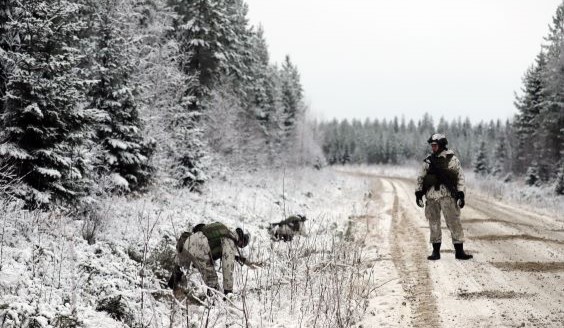
Finland’s withdrawal from the Ottawa Anti-Personnel Landmines Convention took effect on 10 January. The Defence Forces will start measures for acquiring anti-personnel landmines and providing the Defence Forces personnel, conscripts and reservists with anti-personnel landmine training.
Withdrawal from the Ottawa Anti-Personnel Landmines Convention allows the Defence Forces to acquire anti-personnel landmines and to plan and launch APL training. Anti-personnel landmine capability will be built as one of the engineer materiel projects following the Defence Forces’ regular planning and procurement process.
-For the Defence Forces, anti-personnel landmines are one addition to our system in a time when strengthening defence capability is particularly important. In the Defence Forces’ operations, anti-personnel mines will be made part of counter mobility, which involves blocking the enemy’s movement by means of anti-tank mines and various types of obstacles taking advantage of the natural obstacle value of the terrain, says Inspector of Engineers, Colonel Riku Mikkonen at the Army Command.
- We will use mines only in emergency conditions in accordance with units’ plans in combat areas as part of other use of fire. In peacetime, anti-personnel mine training will be conducted using training equipment.
Anti-personnel mines will be used in the Defence Forces according to specific plans and under supervision. Personnel, reservists and conscripts will be trained in the responsible use of mines: how to mark mines, document and monitor the use of mines, and to select areas where mines could be used, so as to avoid harm or injuries to civilians or own units.
According to instructions being prepared, anti-personnel landmine training will start for military personnel in early 2026 and for conscripts starting from Contingent 1/2026. Reservists will be provided with APL training in refresher training exercises depending on their tasks.
Training instructions include principles regarding what kind of equipment and procedures will be used and at what stage anti-personnel mine training will be provided in conscript service.
At the first phase, directed fragmentation charges will be used and trained in APL training as they can also be used as mines, and they are already available in the Defence Forces. New anti-personnel mines are intended to be developed in cooperation with domestic defence industry with a further goal of manufacturing them in Finland. Discussions with domestic industry will start in early 2026. The Defence Forces will also follow the development of anti-personnel mines and possible supply opportunities from abroad.
In principle, the new anti-personnel mines aimed to be acquired would be simple, affordable and easy to use. More advanced technology in landmines will be considered at a later stage. This technology would feature, for example, sophisticated sensors, remote controllability, remote delivery, and auto-neutralization. Developing new capabilities advances following the Defence Forces’ regular development and project processes.
- Aspects taken into account in the consideration of new anti-personnel landmines include, among others, the security environment, quantities of mines to be stockpiled in peacetime, and the ability to produce new mines quickly in emergency conditions. A more accurate estimate of the cost of these acquisitions will be obtained as the planning advances. At any rate, the production of anti-personnel mines will involve several years, says Colonel Mikkonen.
The goal is to have the first new mines and their exercise equipment available in the course of 2027, after which the training use of anti-personnel mines will become a regular part of conscript and reservist training.
After Finland’s accession to the Ottawa Convention, replacing the capability of anti-personnel landmines was conducted by acquiring, for example, modernized anti-tank mines, directed fragmentation charges, night vision devices, drones, reconnaissance and forward observation devices, and rocket launcher capability. These capabilities which replaced the anti-personnel mines have had and still have vital importance to the Defence Forces’ overall capability. Defence is being developed as an entity to be complemented by new anti-personnel landmines.
An anti-personnel landmine (e.g. prong-operated blast mine and stake mine) is an explosive that detonates when the victim steps on the fuze or runs into the tripwire. The impact of a mine is based on the pressure of detonation or fragments.
The purpose of anti-personnel landmines is to slow down the enemy’s movement and operating, and to make it harder for the enemy to clear the adversary’s obstacles and anti-tank mines. Landmines are used for monitoring areas and denying access to them, as well as protecting targets and causing the enemy casualties.


